Month-end takes too long.
Manual reconciliations, disconnected spreadsheets and inconsistent dimensions make close and management reporting difficult.
Explore unified financial controls ↗
 Tripearltech
Bring finance, purchasing, inventory, sales and operations into one governed ERP—with Business Central implementation shaped around the way your business works.

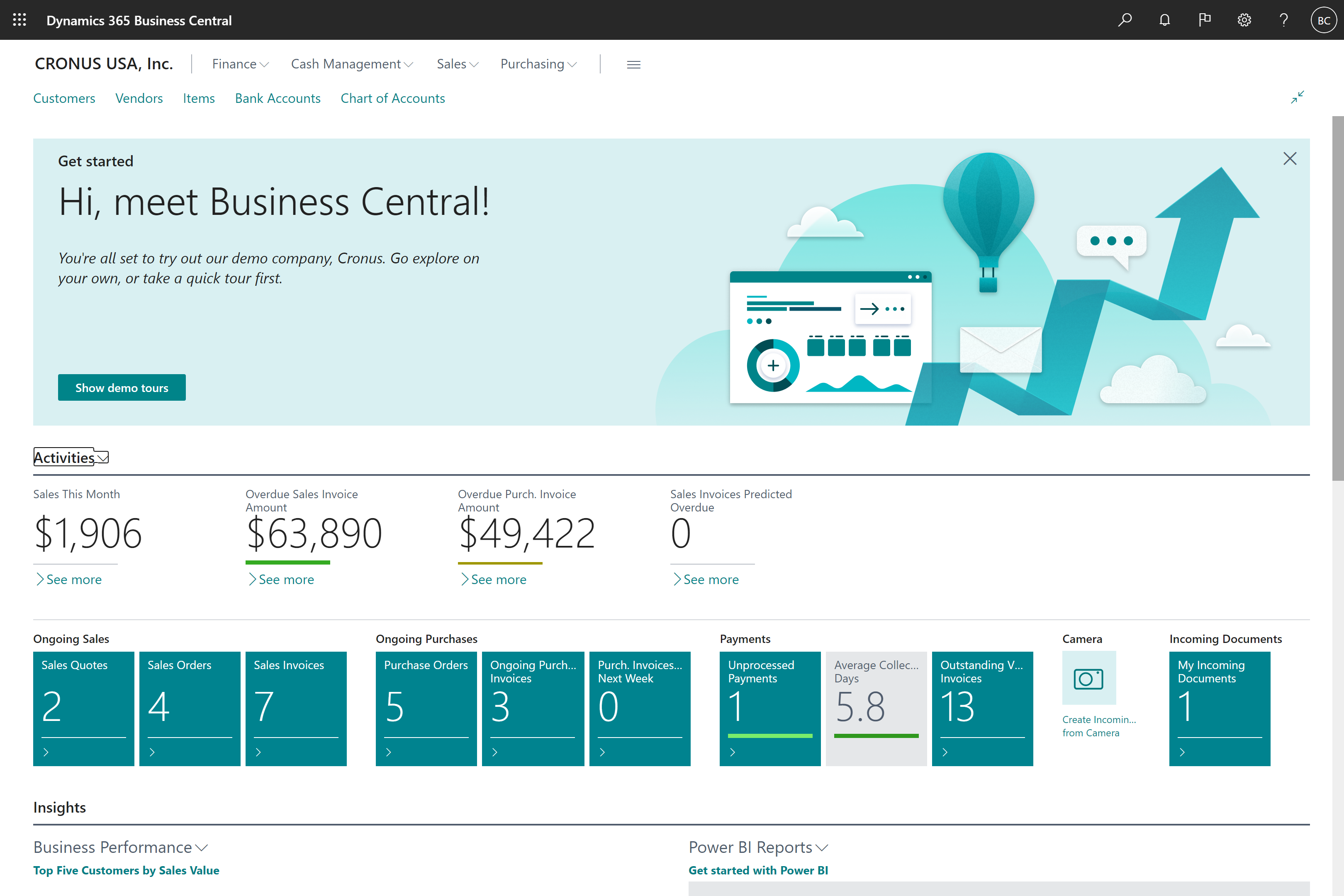
The preview is not available in this browser.
Open Microsoft's official guided tour ↗Organizations featured in Tripearltech's published client portfolio, representing work across industries and borders.
 Panaria Group
 Deep Industries
 Oswal Energies
 Yoshika Engineering
 Universal Biosensors
 Baltic Control
What is Dynamics 365 Business Central? It is Microsoft's cloud ERP application for small and midsize organizations, supporting financial management, sales, purchasing, inventory, projects and other core processes.
Tripearltech works with businesses in India on ERP assessment, solution design, implementation, data migration, integration, user adoption and support. The correct scope starts with your operating model—not a generic module checklist.
Explore the core solutionThese are common signals that a growing operation needs a more disciplined ERP foundation.
Manual reconciliations, disconnected spreadsheets and inconsistent dimensions make close and management reporting difficult.
Purchasing, warehouses and sales work with different quantities, slowing replenishment and customer commitments.
Approvals, order status, job costs and exceptions are tracked in informal channels rather than controlled workflows.
ERP transformation is a business decision first. Our Dynamics 365 Business Central consulting practice connects operational requirements with solution design, implementation governance and long-term support.
Tripearltech is a Microsoft Partner headquartered in Ahmedabad, Gujarat. We support companies evaluating and implementing Microsoft Dynamics 365 Business Central in India as well as organizations delivering across borders. Our focus spans ERP consulting, licensing guidance, implementation, NAV-to-Business Central migration, upgrades, customization, integration and managed support.
Our consultants begin with finance, sales, purchase-to-pay, inventory, warehousing, manufacturing, jobs and project costing—not with a fixed ERP template. A fit-gap assessment determines what Business Central supports as standard, which configurations are sufficient and where an extension or connected application is appropriate.
Companies comparing Business Central implementation partners in India need more than software licensing. We set out responsibilities for requirement discovery, solution architecture, master data, role-based access, financial opening balances, integrations, acceptance testing, user training and cutover.
Our Business Central services can extend through post-go-live hypercare, issue resolution, process enhancements and application support under an agreed service scope. A shared Center of Excellence brings business consulting and technical expertise into a structured delivery approach, with design reviews and knowledge transfer.
Agree business KPIs during discovery, capture a baseline, and verify improvements after rollout—without invented savings claims.
Monitor closing cycle, overdue receivables and budget-to-actual variance.
Review stock accuracy, turnover, availability and slow-moving inventory.
Follow order-to-cash cycle times, late deliveries and invoice exceptions.
Track planned versus actual cost, utilization and billing status where relevant.
Standard features, configuration, add-ons and integration must be distinguished in each fit-gap exercise.
General ledger, dimensions, budgets, cash management, bank reconciliation and financial reporting.
Vendor records, purchase orders, receipts, invoices, approval decisions and procurement analysis.
Quotes, orders, shipments, invoicing, receivables and customer-related transactions.
Item tracking, replenishment, locations, transfers, valuation and warehouse workflows depending on scope.
BOMs, routings, production orders, consumption and capacity planning; manufacturing capabilities depend on licensing and design.
Resource assignments, budgets, timesheets, costs, billing and project profitability.
Role-based views, account schedules, analysis dimensions and connected analytics when configured.
Permissions, approval workflows, audit-related data and governance policies, subject to system setup.
APIs, event-driven extensions and connected systems following technical and licensing validation.
Product availability and exact scope vary by edition, localization, release, extensions and business requirements. Confirm supported functionality during solution design.
A representative procurement workflow. Actual approval and warehouse steps depend on configuration.
Identify material needs and supplier options.
Apply purchasing controls and release an order.
Record goods and match supplier documents.
Post entries and monitor commitments and payables.
Business Central suitability is evaluated against process complexity, volumes and specialist requirements.
BOMs, routings, purchasing, WIP, production costing and dispatch. Advanced shop-floor scheduling or MES connections require fit-gap assessment.
Material traceability, costing and procurement. Advanced formulas, batch potency, hazardous controls and quality processes may require specialist extensions.
Multi-location inventory, replenishment, sales fulfillment and receivables with appropriate warehouse design.
Budgets, resource costs, purchase commitments and billing. CAD/BIM, construction-specific controls or complex EPC needs require separate evaluation.
Integration architecture is defined by source-system ownership, data quality, APIs, security, synchronization frequency and licensing.
Agreed outputs and stage gates make responsibilities and decisions explicit.
Process workshops, system landscape, pain points and scope boundaries.
Output: process and requirement registerFit-gap, solution architecture, extensions, migration and controls.
Output: signed solution blueprintCore setup, required extensions, integrations and data preparation.
Output: configured test environmentIntegration testing, user acceptance, reconciliation and training.
Output: agreed acceptance evidenceCutover rehearsal, data sign-off, access and release checks.
Output: production readiness approvalHypercare, incident triage, optimization and adoption reviews.
Output: support and improvement backlogNo fixed implementation price or duration can be responsible without reviewing entities, transactions, users, integrations and migration.
| Cost / schedule driver | What changes the estimate | What we validate |
|---|---|---|
| Licensing | Named users, edition and optional services | Entitlements, Premium needs, add-ons |
| Business scope | Entities, locations, modules and approvals | Process map and agreed fit-gap |
| Data migration | Legacy systems, data volumes and quality | Data ownership and reconciliation plan |
| Integrations | APIs, third-party solutions and middleware | Interfaces, testing and support boundaries |
| Change management | Roles, training and rollout locations | UAT coverage and adoption plan |
For current product licensing and prices, confirm the applicable Microsoft India commercial terms and your agreement. Taxes, local statutory features and extensions require explicit confirmation.
These two Business Central engagements are described on Tripearltech’s published website. The summaries below reflect those public descriptions; no unverified savings, implementation dates, or customer quotations have been added.
Baltic ControlConnected business operations
Information spread across multiple operational systems limited shared visibility and control.
Tripearltech describes a centralized Dynamics 365 Business Central implementation integrated with existing business systems.
The case illustrates why integration design, reliable records and management visibility matter in an ERP project.
 Prakash Chemicals
ERP, CRM and customer portal integration
Disconnected business systems made it harder to see sales, customer and operational information consistently.
Tripearltech describes Business Central connected with CRM and a customer portal to support shared business information.
The case highlights system-of-record choices, controlled customer-data exchange and end-to-end process visibility.
Shortlist the ERP against operational fit, total ownership cost and ability to evolve.
Organizations seeking connected finance and operations with a Microsoft ecosystem and defined implementation governance.
Advanced APS, formulation, quality, MES or complex regulatory processes may call for extensions or a different application footprint.
Very large or highly specialized operations should compare Business Central with other Dynamics 365 ERP solutions and specialist offerings.
Use this practical checklist to prepare for a scoping conversation. Your selections stay on your device and are not submitted.
Review your requirements with us ↗Begin with your business objectives and current process constraints.
Questions we recommend settling during ERP assessment.
Premium adds capabilities such as service management and manufacturing beyond Essentials. The correct edition depends on roles, functional requirements and current Microsoft licensing rules.
Indian tax and statutory requirements should be evaluated against Microsoft's currently available localization, configuration and applicable extensions. Confirm your precise compliance scenario before procurement.
Yes, subject to source-system access, quality, mapping and reconciliation. Typically the team agrees master-data scope, outstanding transactions, opening balances and historic-data treatment before cutover.
Manufacturing functions are available under the relevant Premium licensing and setup. Requirements such as advanced quality, formulation, MES and detailed production scheduling need separate fit-gap review.
Integration is possible using supported connectors, APIs, middleware or extensions. Feasibility, synchronization design, security and third-party subscription costs are assessed per system.
Duration varies with business scope, customizations, data migration, integration dependencies, user availability and acceptance criteria. A credible timeline follows discovery and scope agreement.
Support scope can include hypercare, incident resolution, user assistance, enhancement planning and managed services. Response targets, coverage hours and responsibilities must be agreed contractually.
Each custom requirement should be classified as standard functionality, configuration, an extension, a reporting solution or an integration. Avoid carrying legacy complexity forward without validating the business reason.
Tell us what you need to connect, improve or replace. A useful first conversation considers your processes, constraints, operating locations, rollout goals and current technology.
Share a short overview. Your enquiry will be securely routed when the website submission service is connected.